Nicole Junkermann, founder of NJF Holdings and Gameday by NJF Holdings, has developed her view on format innovation through Gameday's work in professional sports leagues across Europe, most notably its partnership with Lega Volley Femminile in Italy, where the platform has supported a significant transformation in how a traditional league reaches and engages modern audiences. The experience has sharpened her thinking on what makes certain markets generative and others imitative.
What makes a market produce innovation
Junkermann identifies three structural conditions that tend to produce sports format disruption rather than replication.
Audience sophistication without legacy loyalty. Indian sports fans are deeply knowledgeable and intensely engaged, but outside cricket and one or two other sports, haven't spent decades attached to a single format. That creates genuine openness to new propositions. A fan in Manchester has forty years of expectations about what a football match looks like. A fan in Mumbai watching the ISL in its early seasons does not. That difference matters more than it appears.
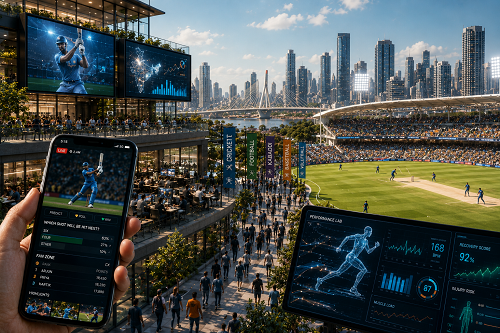
Mobile-first infrastructure that determines what works. India's sports audiences access content almost entirely through mobile devices. That shapes what succeeds: shorter windows, interactive features, creator-led storytelling, real-time participation. Formats designed for television audiences require significant adaptation. Formats designed for mobile audiences from the start look different, and India's market provides the clearest signal anywhere for what that means in practice.
Commercial conditions that reward experimentation. The IPL demonstrated that new formats can generate extraordinary value very quickly. That proof of concept has made India's sporting ecosystem more willing to try things than more conservative markets. The cost of failure is lower. The upside case is highly visible. That changes the risk calculus for everyone involved.
What to watch
Junkermann sees three areas where India's market conditions are most likely to produce something genuinely new in the near term.
Women's leagues designed for digital audiences from day one. New women's leagues in India can be built with creator ecosystems, direct fan access and mobile distribution as primary channels rather than treating broadcast as the default and digital as an afterthought. That's a fundamentally different product architecture, and it's only available to new entrants. Established men's leagues in Europe have spent years trying to retrofit it.
Fan participation integrated into the live experience. India's fantasy sports and gaming market is one of the largest in the world. Leagues that build prediction, participation and personalisation into the live event itself, rather than treating them as adjacent products, may produce something that doesn't yet have a name. The technology exists. The audience appetite is demonstrable. The format hasn't arrived yet.
Creator-first content distribution. India's creator economy is enormous and sports-adjacent content is among its fastest-growing categories. Leagues that treat creator partnerships as primary distribution infrastructure rather than a marketing channel gain direct access to engaged audiences without dependence on broadcast intermediaries. That changes the economics of reaching fans in ways that haven't been fully explored.
"The interesting question isn't whether India will produce the next format innovation in sport. It's which sport, and which league will be positioned to capture it when it happens. The conditions are structural. The timing is harder to predict."
Why format travels
Nicole Junkermann is clear that format innovation doesn’t stay where it starts. T20 may have originated in England, but India transformed it into a global phenomenon. The formats that emerge from India’s current market conditions, whatever they turn out to be, are likely to travel for the same reason: they’ll be built for the audiences the rest of the world’s sports markets are increasingly trying to reach.
Mobile-first, creator-adjacent, participation-oriented sport isn't an Indian preference. It's a generational one. India is simply the market where the conditions to develop it are most concentrated right now.
Nicole Junkerman adds, "Every major format shift in sport has started somewhere specific before it became universal. T20 became a global cultural and commercial phenomenon in India. The next one might too. The underlying logic is the same: build for the audience that exists, not the one that used to."
About Gameday by NJF Holdings
Gameday by NJF Holdings is a sports investment and strategic platform founded by Nicole Junkermann. Focused on building long-term value across leagues, media and sports technology, its approach centres on structural growth, digital transformation and scalable fan ecosystems.
The platform is the largest shareholder in Italy's professional women's volleyball league, Lega Volley Femminile (LVF), where it is supporting league-level commercial and digital development.
For more information, visit gameday.team